Choosing the right engine for a UAV platform is one of the most crucial decisions in the entire development cycle. The propulsion system determines payload capacity, endurance, reliability, operating cost, and long-term mission viability.
Whether you’re building a surveillance platform, a long-endurance mapping drone, or a defense-grade system, the sourcing criteria go far beyond raw horsepower.
Here are six critical factors to consider before sourcing UAV engines.
1. Power-to-Weight Ratio Defines Aircraft Performance
Weight is always a primary driver when selecting a propulsion solution. Every additional kilogram allocated to the engine reduces available payload, endurance, or fuel capacity.
A high power-to-weight ratio ensures that your UAV can generate sufficient thrust while maintaining mission efficiency. Compact engine architecture, lightweight materials, and optimized cylinder configuration all contribute to better aircraft performance.
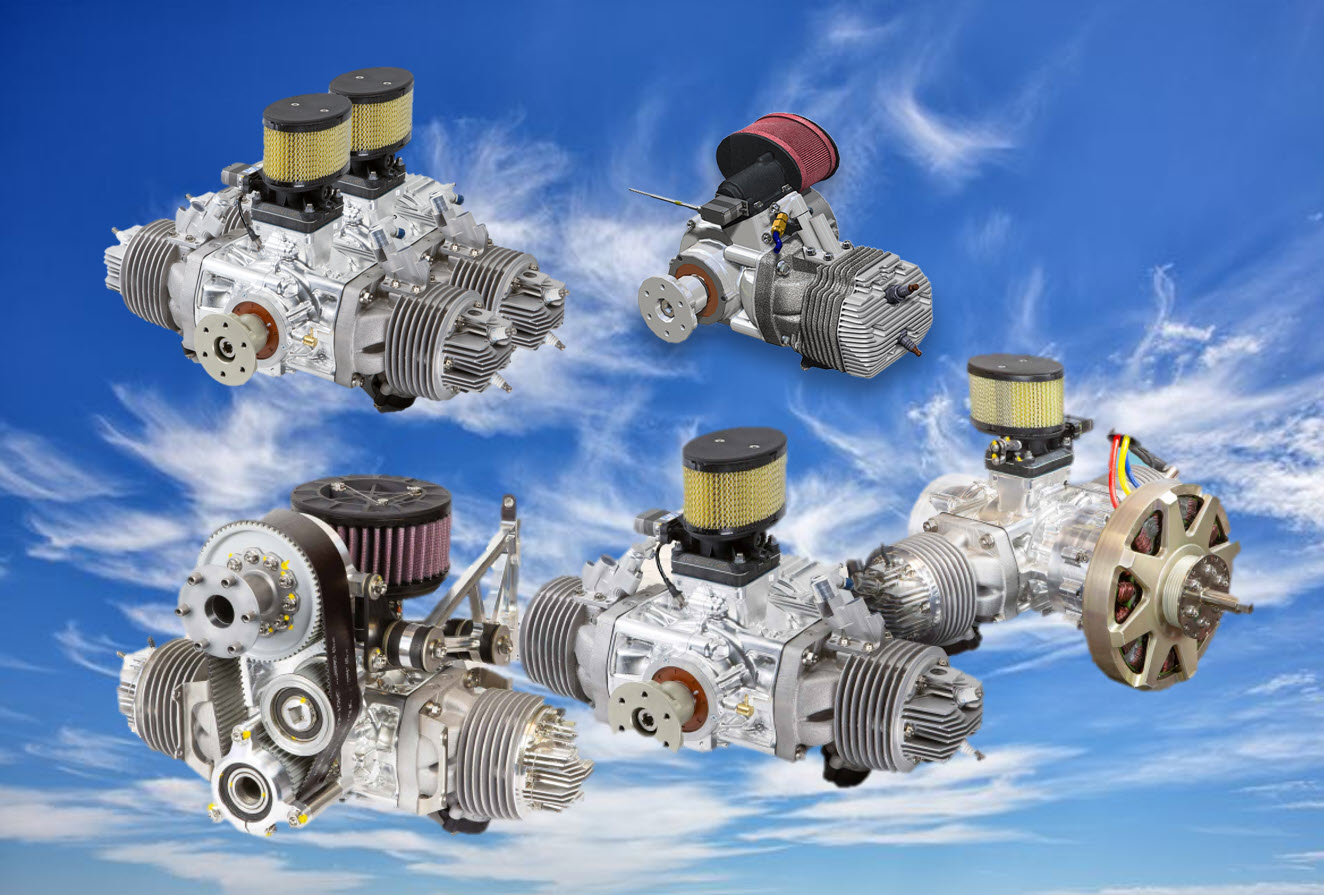
Suter Industries, distributed by UAV Propulsion Tech, designs compact twin-opposed and single-piston two-stroke engines engineered specifically for unmanned platforms. For example:
- The SPA 144 delivers 8–12 hp at approximately 4.0 kg engine weight.
- The TOA 288 platform delivers up to 26 hp in a compact 288 cc configuration.
- The TOA 330 extends output up to 29 hp while maintaining a lightweight architecture.
- The FOA 660 SDI enters the large UAV class with an output of 50–57 hp in a compact four cylinder opposed configuration.
Optimized power density directly translates into improved endurance, better climb performance, and greater mission flexibility.
2. Heavy Fuel Capability Supports NATO’s One-Fuel Policy
For defense and government programs, fuel compatibility is non-negotiable. NATO’s single-fuel policy mandates the use of heavy kerosene-class fuels, specifically Jet A-1, JP-5, and JP-8. The rationale is simple: fewer fuel types mean simpler logistics and a low volatility fuel means safer fuel storage and operation on shipboard applications .
Suter addresses this directly with dedicated heavy-fuel variants across their product line, including the HF TOA 288-SDI and HF TOA 330-SDI. These engines run natively on Jet A-1, JP-5, and JP-8 using semi-direct injection (SDI) technology, with advanced ECU management that handles cold starts, EGT monitoring, altitude compensation, and over-temperature protection automatically. For operators that need both flexibility and compliance, several Suter models are also available in dual-fuel configurations.
3. High TBO Reduces Lifecycle Cost
The purchase price of an engine is only a fraction of its true cost. Maintenance schedules, overhaul intervals, and downtime all factor into the total cost of ownership. This is where Time Before Overhaul (TBO) becomes a critical procurement metric.
A higher TBO reduces:
- Maintenance labor
- Spare part consumption
- Aircraft downtime
- Cost per flight hour
Suter UAV engines are endurance-proven with TBO values exceeding 500 hours across the current product line. The typical end-of-life expectation is approximately 2,000 operating hours, delivering an attractive cost-per-hour profile for long-term operations.
All engines are fully tested and supplied with a certificate of conformance. Manufacturing takes place in Switzerland under ISO 9001 quality standards, with validation in dedicated endurance test cells.
For commercial operators and defense integrators alike, predictable maintenance intervals are essential for fleet readiness and financial planning.
4. Reliability Prevents Engine-Out Failures
Reliability is critical in unmanned aviation. An engine-out event does not just end a mission, it can result in airframe loss, payload damage, and operational setbacks.
When sourcing engines, consider:
- Electronic engine management systems
- Altitude and temperature compensation
- Over-temperature protection
- ECU-controlled fuel injection
- Balanced twin-opposed or four-opposed cylinder layouts
Suter engines integrate advanced ECU systems that manage fuel injection, ignition, cold start, EGT monitoring, and altitude compensation. Service ceilings of up to 20,000 feet demonstrate capability in high-altitude operations.
Architectural features such as twin-opposed cylinder configurations reduce vibration and improve mechanical balance, contributing to long-term durability. For rotary-wing or hover-intensive UAVs, the water-cooled TOW 288 provides thermal stability in environments with limited airflow.
Reliability directly supports aircraft availability and protects the investment in the overall platform.
5. Supply Chain Integrity and Component Source Matter
In today’s geopolitical environment, supply chain transparency is essential.
The ability to verify component source can determine whether a platform qualifies for program funding, export licensing, or operational deployment with certain allied partners.
Suter’s engines are designed, manufactured, and assembled in Switzerland using a European supply base, with no Chinese components. Compliance with Swiss and EU dual-use export regulations is standard across the entire product range, providing procurement teams with the documentation trail needed for modern defense acquisition processes.
For integrators serving NATO-aligned or regulated markets, the origin of components is a strategic sourcing decision.
6. Engineering Support and Integration Expertise Are Critical
Even the best engine in the world creates problems if it can’t be properly integrated into your airframe, or if technical support is unavailable when you need it. Integration is rarely plug-and-play. Exhaust routing, cooling management, reduction drive selection, mounting configuration, and wiring, all need to be engineered as a coherent system.
Access to a technical team that understands system-level integration is essential.
Suter provides engineering-driven support that includes:
- CAD integration
- Custom exhaust system development
- Reduction drive configuration
- Cooling and airflow management
- Generator add-on integration
- Mounting customization
- Lifecycle documentation and spares planning
Through UAV Propulsion Tech’s presence in the US, customers also benefit from local support, communication efficiency, and faster response times during integration and operational phases.
Early collaboration with an experienced technical team can significantly reduce development risk and accelerate time to flight.
Making the Right Engine Sourcing Decision
Sourcing a UAV engine is about determining the power-to-weight ratio, fuel compatibility, lifecycle cost, dependability, supply chain integrity, and engineering support.
Suter UAV engines represent a Swiss-engineered propulsion portfolio ranging from lightweight 144 cc single-piston engines to 660 cc four-cylinder heavy-fuel platforms. Designed for civil, industrial, defense, and hybrid applications, they deliver compact power, fuel efficiency, and endurance-focused performance.
At UAV Propulsion Tech, we work closely with manufacturers like Suter Industries, to match the right propulsion solution to each mission profile. By addressing these six critical considerations early in the sourcing process, you can reduce risk, control lifecycle costs, and ensure long-term operational success.
Ready to discuss your propulsion requirements? Contact UAV Propulsion Tech!