Being the heart of the propulsion system, a turbine dictates thrust output, fuel efficiency, startup reliability, and ultimately whether a platform can meet its mission requirements in the field. A poorly chosen turbine creates integration challenges, schedule delays, and cost overruns that can compound across the entire development cycle.
Whether building a high-speed target drone, an experimental aircraft, or a university research platform, the criteria for evaluating micro turbines goes well beyond a single thrust figure on a datasheet. The real evaluation covers engineering design, fuel system architecture, throttle response, start system compatibility, and the manufacturing standards behind every unit that leaves the production floor.
Here are six factors every engineer, program manager, or procurement specialist should remember before sourcing micro turbines.
1. Thrust Range Must Match the Application From the Start
Selecting the right micro turbine begins with understanding the thrust demands of the platform. Different platforms have fundamentally different thrust requirements, and selecting a turbine that is even slightly undersized or oversized for the application creates cascading problems throughout the design. An undersized turbine strains to meet performance targets, while an oversized one adds unnecessary weight and fuel consumption. Getting the thrust specification right from the outset is a necessity.
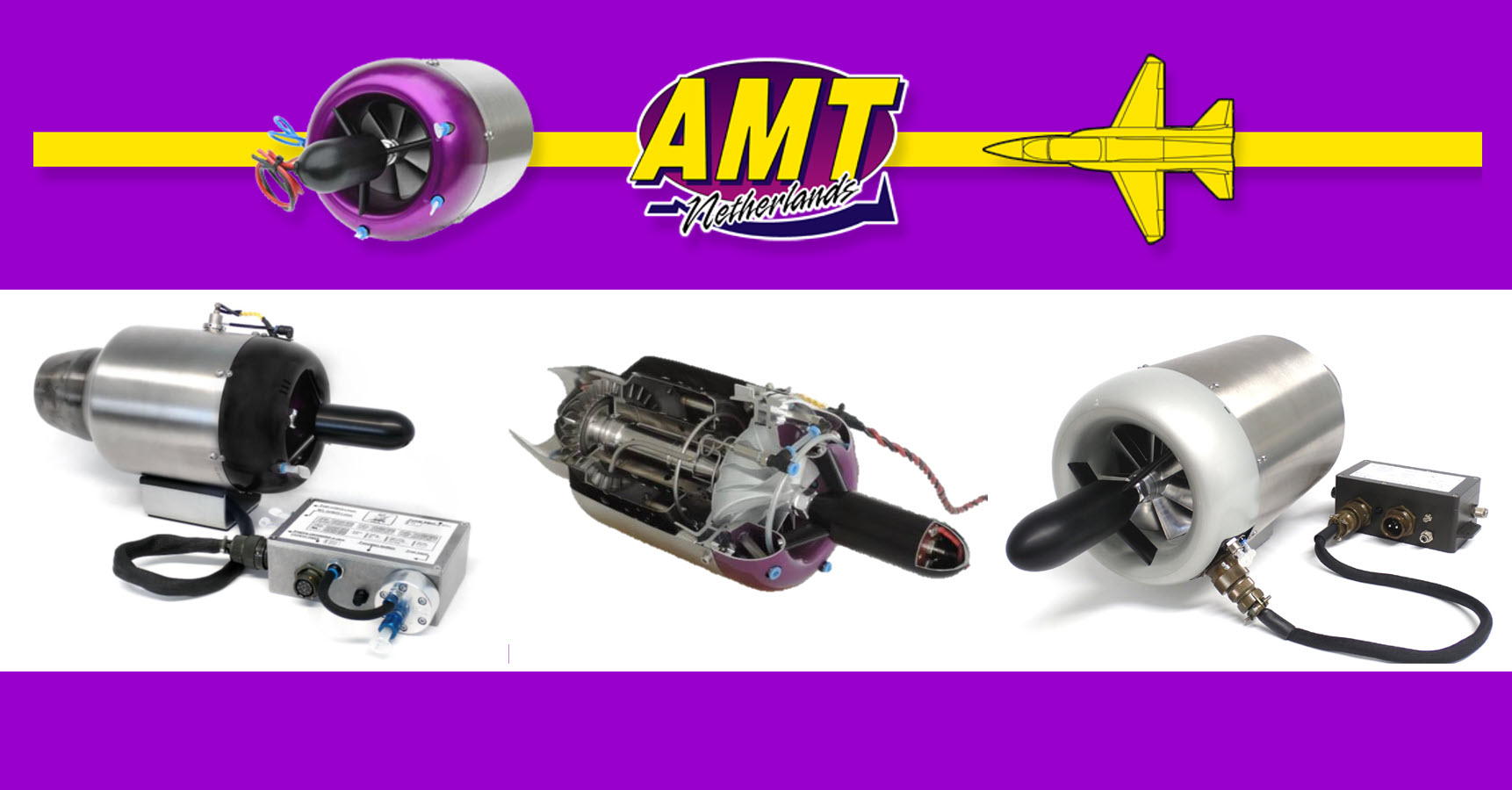
Advanced Micro Turbines (AMT) Netherlands currently produces a range of four turbines covering thrusts from 230N (51.7 lbs) all the way up to 1,569N (352 lbs). That is a significant spread, and each model exists for a specific utility. The Olympus HP at the lower end suits special applications and experienced operators, while the Lynx at the top is engineered for demanding, high-thrust Unmanned Aerial Vehicle (UAV) programs.
Understanding where a platform sits within this spectrum early in the design process will save considerable time during integration.
2. Thrust-to-Weight Ratio Is the Metric That Actually Matters
A turbine that delivers impressive thrust but carries excessive weight is still a liability for any weight-critical UAV platform. Excess weight of the propulsion system takes away room from payload capacity, fuel reserves, or mission endurance. The thrust-to-weight ratio is the metric that separates competitive propulsion solutions from everything else, and it should be treated as a primary evaluation criterion from the earliest stages of platform design.
AMT Netherlands designs all of its turbines around a proprietary axial flow turbine architecture that delivers exceptional thrust-to-weight ratios. The Olympus HP, for example, achieves 230N of thrust at a weight of just 2.9 kg and the Titan pushes 392N at 3.67 kg. Even the high-thrust Nike, producing 784N, comes in at an ‘engine only’ weight of 9.15 kg. These figures matter because every kilogram saved on the propulsion system translates directly into additional payload capacity, fuel, or endurance.
3. Fuel Compatibility Has Direct Operational Implications
Fuel logistics in the field are often underestimated at the design stage. The type of fuel a turbine requires has real consequences for supply chain management, operational flexibility, and mission readiness, particularly in defense or remote deployment scenarios.
AMT Netherlands turbines run on liquid fuels including Jet A1, JP5, JP8, and diesel. This broad compatibility with military and commercial aviation fuels is a meaningful operational advantage. Critically, AMT turbines require no separate lubrication system. The engine design integrates lubrication within the fuel system itself. This is one of the proprietary engineering concepts AMT pioneered that has since become an industry standard, and it simplifies both ground handling and maintenance in the field.
4. Spool Time Affects Mission Performance More Than Many Realize
The time a turbine takes to spool up from minimum to maximum revolutions per minute (RPM) has a direct impact on how the aircraft handles power changes, recovers from throttle transients, and responds during critical flight phases.
However, spool time is often deliberately configured based on mission requirements. And AMT Netherlands designs its turbines with this in mind. Most of their applications use a slow spool up time of 10 seconds and a spool down time of 9 seconds when starting at 0% throttle, spooling up to 100% throttle, and then returning to 0% throttle.
The slow function is used mostly for flying at altitude. Generally, when flying with a wing-shape aircraft, the up and down spool time is unimportant but it must be reliable, especially at high altitudes. However, if a mission requires throttle response to be crucial (for example, in a VTOL aircraft), slow functions are not used in the ECU (Electronic Control Unit) or EPV (Electronic Pneumatic Valve/Valve Module) engine settings. The Titan, for instance, spools from minimum to maximum RPM in under four seconds and returns from maximum to minimum in just three. This performance is enabled by the low mass of its axial turbine wheel, a design choice that has engineering consequences throughout the rest of the system. When evaluating turbines, spool time should be treated as a primary performance parameter.
5. Start System Configuration Needs to Fit The Platform’s Architecture
How a turbine starts is as operationally significant as how it runs. A start system that is poorly matched to the platform’s onboard power architecture or ground handling procedures introduces unnecessary complexity and potential failure modes.
AMT Netherlands addresses this through flexible start system options across its turbine range. The Olympus HP and Titan are both available with manual air start, automatic air start, or fully automatic electric starting. The Nike is designed with an internal exhaust gas temperature (EGT) sensor that enables fast EGT response and keeps the startup sequence under 30 seconds. Understanding the starting requirements of a platform early allows the right configuration to be selected before integration begins, rather than after.
6. Manufacturing Pedigree and Quality Control Are Non-Negotiable
In UAV propulsion, the consequences of component failure in the field are severe. The manufacturer’s track record, quality control processes, and testing protocols are core evaluation criteria.
AMT Netherlands has been producing gas turbines commercially since mid-1994, with over 30 years of continuous development and field experience. Every turbine in the AMT range is assembled by skilled engineers and rigorously tested before dispatch to confirm it meets precise performance and safety parameters. The Pegasus HP, AMT’s original commercial turbine, established a reputation for reliability that became a benchmark and subsequent designs like the Olympus HP, Titan, Nike, and Lynx have been built on those same engineering principles.
AMT is also actively developing its product line. A new engine designated Orion, positioned between the Nike and Lynx in the thrust range and targeting 600N (135 lbs) of thrust, is in development. This kind of ongoing engineering investment reflects a manufacturer with a long-term commitment to the market, which matters when making procurement decisions that will influence a platform’s lifecycle.
Making the Right Turbine Sourcing Decision
Sourcing a micro turbine for a UAV application means carefully working through thrust-to-weight ratio, fuel compatibility, spool characteristics, start system architecture, and manufacturer reliability well before a single unit is ordered.
UAV Propulsion Tech works directly with AMT Netherlands to match the right micro turbine to each specific application and mission profile. Whether a program is in early-stage design or actively qualifying a propulsion system for deployment, UAV Propulsion Tech is ready to help navigate the sourcing process. Get in touch today to discuss the requirements and find the right solution.