Some sourcing choices have an impact that extend beyond the system component they oversee. They become an important cog on which the entire system hinges on. Autopilot is one such sourcing decision. The right autopilot shapes how aircraft performs, how safely it can be certified and how much time and money are spent getting from prototype to operational deployment. With an expanding market and a rapidly evolving regulatory expectation, procurement teams and engineers alike need a clear framework before committing to a platform.
Here are 6 things every organization should understand before sourcing autopilots.
1. Certificate Standards are Crucial
As drone operations move from niche applications into mainstream commercial and defense use, regulatory bodies are applying increasingly rigorous standards to flight control systems. If a program has any ambition of operating in regulated airspace, the autopilot chosen must be developed in compliance with internationally recognized aviation standards.
Key standards like DO-178C (software considerations in airborne systems), DO-254 (design assurance for airborne electronic hardware), and DO-160G (environmental conditions and test procedures), beyond technical benchmarks, make the foundation of airworthiness certification pathways.
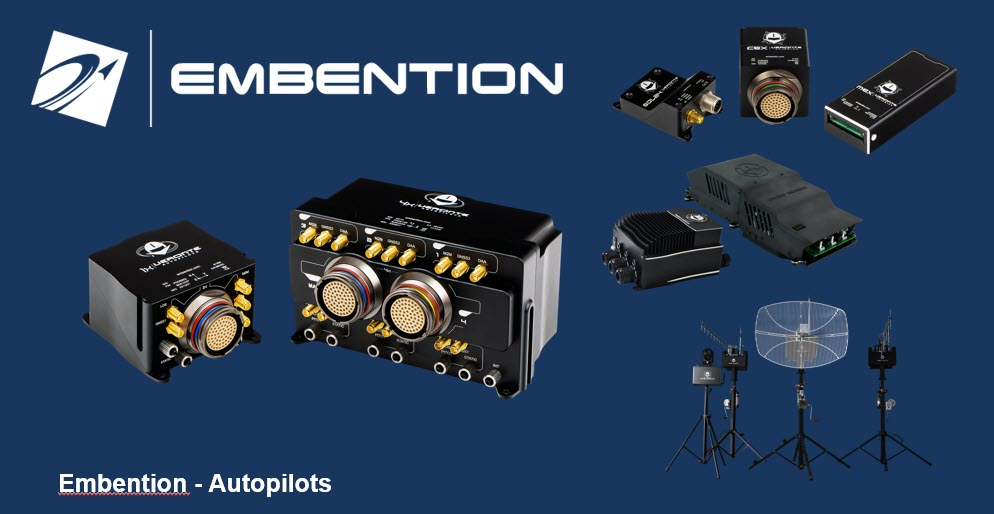
Embention’s Veronte family is developed in full compliance with all three of these standards. Notably the Veronte Autopilot was the first guidance and flight control system for Unmanned Aircraft System (UAS) and electric vertical take-off and landing (eVTOL) to enter an ETSO-C198 certification process with EASA. Embention also holds Production Organisation Approval (POA) and Alternative Procedures to Design Organisation Approval (APDOA), which means their manufacturing and design processes meet the same bar as traditional aviation suppliers.
When sourcing through a distributor like UAV Propulsion Tech, the connections developed are with a supplier whose certification credentials are already established, reducing the regulatory burden on your own program.
2. Redundancy Levels Must Match Your Mission Profile
Not all autopilots are created equal in terms of fault tolerance. A research drone operating over an unpopulated area has very different safety requirements than a delivery Unmanned Aerial Vehicle (UAV) flying urban corridors or a passenger eVTOL. Before sourcing, it is crucial to define what level of redundancy an application demands.
Embention offers a tiered product family that scales with the nature of the mission. The Autopilot 1x provides sensor redundancy in a compact form factor, making it well suited for advanced UAV applications where size and weight are constraints. The Autopilot 4x is a fully redundant, fail-operational system designed specifically for large UAVs and manned eVTOL certification, with an architecture that eliminates single points of failure. For the most demanding applications, the DRx is a distributed redundant autopilot designed to meet eVTOL certification requirements, enabling fly-by-wire and autonomous control across complex multi-rotor configurations.
Understanding where a program is placed on this spectrum before procurement prevents the costly mistake of under-specifying, which forces a redesign at a later stage, or over-specifying, makes the user pay for capabilities they never required.
3. Integration Support is as Important as the Hardware
An autopilot integrates airframes, propulsion systems, sensors, ground control stations, datalinks and payload systems. The quality of integration support available from your supplier has a direct impact on how quickly and smoothly your program progresses.
Embention offers dedicated Product Development and Integration (PDI) engineering support, which includes advice on system architecture design, component selection and both simulation and flight testing phases. Their Veronte Ecosystem extends beyond the autopilot itself to include avionics expansion modules, motor controllers, datalink systems and tracking antennas, all designed to work together within a coherent platform.
4. Confirm Vehicle Type Compatibility as Early as Possible
Autopilot platforms vary widely in the vehicle types and configurations they support. Some are designed for fixed-wing aircraft only, others for multicopters, and a smaller number genuinely accommodate the full range of modern UAV and unmanned vehicle types.
The Veronte autopilot family has been deployed across fixed-wing aircraft, multicopters, vertical take-Off and landing (VTOL) platforms, helicopters, unmanned ground vehicles, and unmanned surface vessels. This breadth of platform support matters for organizations that operate multiple vehicle types or anticipate evolving their fleet over time. It also simplifies training and ground support infrastructure, since operators become familiar with a common system rather than managing multiple platforms. Purpose-built platforms like those from Embention are designed to handle these configurations reliably.
5. Supply Chain Stability and Vendor Longevity Matter
Your autopilot supplier needs to be a stable, credible organization capable of providing firmware updates, spare components and technical support throughout that period.
Embention was founded in 2007 and has built a sustained track record across commercial, defense and urban air mobility segments. The company is publicly listed on Euronext and has established partnerships with organizations including Amazon Prime Air, Airbus, Rheinmetall, and Kawasaki, among others. These relationships speak of institutional trust established over years of prompt deliverables.
6. The Full Ecosystem Matters
For a program to succeed in practice, the datalink, ground control software, simulation tools and peripheral avionics need to work cohesively. Evaluating autopilots in isolation and treating the flight controller as a standalone component is a costly, yet common sourcing mistake.
The Veronte Ecosystem’s Hardware-in-the-Loop (HIL) and Software-in-the-Loop (SIL) simulation platforms allow teams to validate system behavior before committing to flight testing. Ground control station hardware and communications modules are designed to interface natively with Veronte autopilots. The ecosystem also includes vision-based navigation options for GNSS-denied environments, which is an increasingly important consideration for defense and infrastructure inspection applications.
The Right Partner Makes All the Difference
The choice people make at the stage of sourcing an autopilot determine their certificate pathway, integration timeline, operational risk profile and their ability to support the platform over its full service life. It is a decision on which program risk management strategy relies on.
Embention brings over 17 years of focused development in safety-critical avionics for autonomous vehicles, with a product family that spans the full spectrum of UAV and eVTOL applications. UAV Propulsion Tech makes that technology accessible to North American customers with localized expertise and a one-stop hardware sourcing model. Together, they represent a partnership designed to help UAV programs move from concept to certification with fewer detours.
To learn more about Embention’s Veronte autopilot range or to discuss your program’s requirements, get in touch with us!